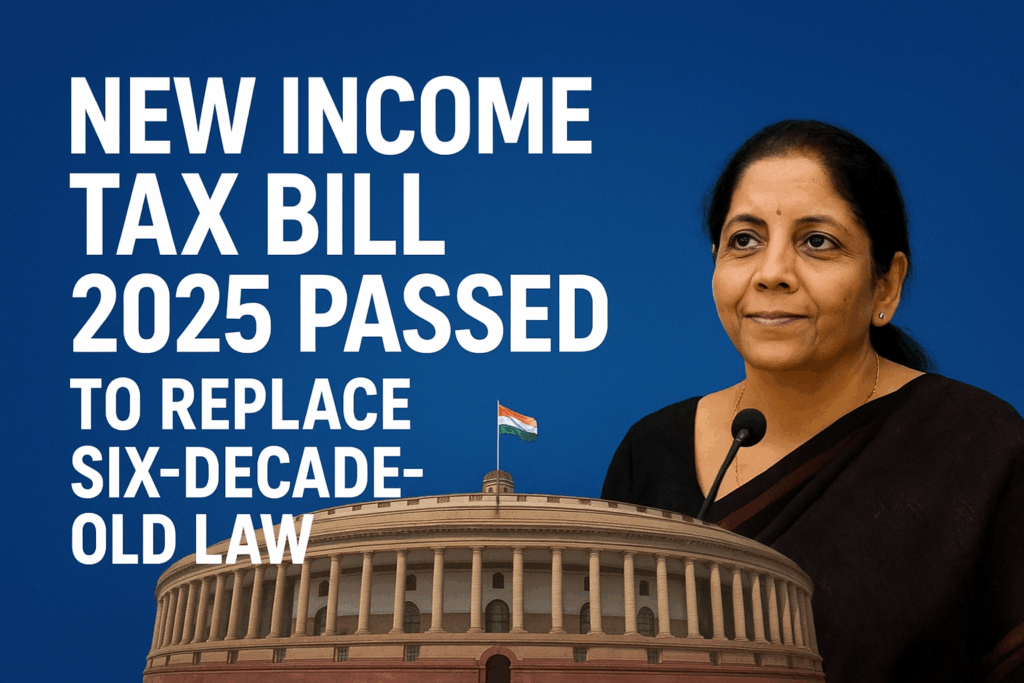
With the introduction of the Income Tax Act, 2025, which went into force on April 1, 2026, India’s tax structure is experiencing a significant change. The goal of this change, which replaces the outdated 1961 statute, is to make tax compliance easier, increase transparency, and lower litigation.
Let’s examine the main points and how they affect professionals, enterprises, and salaried persons.
- The creation of a simplified “tax year”
One of the most significant modifications is the substitution of a single notion, Tax Year, for complicated words like Financial Year (FY) and Assessment Year (AY).
For taxpayers, especially those who are just starting out, this makes things easier to grasp and less confusing. - Modifications to Salary Structure and Required Taxation
Taxation on salary components has been rationalised as of April 2026: • Benefits offered by employers, such as a car, a home, energy, etc., are more precisely defined and may be subject to taxation. • Reduced tax-free benefits • Standardised value of benefits This implies that even if tax rates stay the same, your take-home pay may fluctuate. - Revised HRA and Allowance Benefits
The new regulations stipulate: • Benefits of the expanded House Rent Allowance (HRA) • Revised educational and hostel allowance caps for kids
The goal of these modifications is to help salaried workers, particularly those in cities. - An increase in the standard deduction
In the new tax system: • The standard deduction was raised to ₹75,000.
Salaried taxpayers gain from this as it directly lowers their taxable income. - Better Structure but No Significant Change in Tax Slabs
Although tax slabs are mostly unchanged, the emphasis is on:
- Making things simpler
- Fewer exemptions
- Supporting the new tax system
Rather of lowering taxes, the government wants to make them easier.
- Tighter Disclosure & Compliance Guidelines
Transparency is emphasised in the new system:
- Tighter guidelines for reporting
- Enhanced PAN-based monitoring
- Increased PAN requirements for transactions
This enhances monitoring and lessens tax avoidance.
- Important Shifts in TDS, TCS, and Investments
Among the significant updates are:
- Lower TCS on overseas remittances for medical and educational purposes
• Streamlined TDS processes (particularly for NRIs) - Modifications to the taxation of investments such as Sovereign Gold Bonds
- Lower TCS on overseas remittances for medical and educational purposes
These modifications are intended to facilitate compliance and enhance cash flow.
- Simpler System, Fewer Rules
The complexity is much decreased by the new framework:
- There are now 333 rules instead of 511.
- There are now 190 forms instead of 399.
Common taxpayers find it easier to file returns as a result.
Conclusion:
The new income tax system, which goes into effect on April 1, 2026, is a comprehensive revamp of India’s tax structure rather than merely a policy update. Although tax rates might not alter significantly, the emphasis is on:
- Simplicity
- Openness
- Compliance ease
For taxpayers, this entails reviewing wage scales, making informed decisions between the old and new regimes, and keeping up with compliance regulations.